
The Problem: Manual Invoicing Is a Hidden Admin Drain
For many NDIS providers, invoicing is where all the cracks finally show. Shifts are completed, timesheets are approved, and then the real work begins. Admin teams cross-check rosters against hours worked, match support time to NDIS item codes, apply different rates for weekends or public holidays, and manually build invoices in spreadsheets or Word documents - while also trying to keep clean records and protect sensitive participant information with proper security.
This process isn’t just slow. It’s fragile. One missed rate, one incorrect item code, or one mismatched hour can result in rejected claims, delayed payments, and unnecessary communication with plan managers or the NDIA. Over time, manual invoicing quietly becomes one of the biggest drains on cash flow and admin capacity - and it increases the risk of incomplete records and security gaps when data is being copied and shared across too many places.
Recommended Reads
- Explore More Back‑Office Wins for NDIS Providers
- Practical Reads to Save Time and Reduce Risk
- More Tools to Help You Automate and Scale
- Next Steps on Your Automation Journey
- Keep Building a Compliant, Time‑Saving System
- Smart Reads for Smarter NDIS Operations
- Don’t Miss These Related Guides
- Level Up Your Back‑Office with These Articles
- Further Reading for NDIS Admin Simplification
- Future-Proof Your Operations with AI‑Powered Insights
Why Invoicing Breaks Down in NDIS Businesses
NDIS invoicing is complex because it sits at the intersection of rostering, attendance, pricing rules, and funding categories. When these systems aren’t connected, admin teams are forced to act as the “glue” holding everything together.
Shifts recorded manually must be reviewed and re-categorised. Staff hours need to be aligned with the correct support items. Public holiday, night, and weekend rates are applied inconsistently. The result is invoicing that takes hours each week and still carries risk.
The core issue isn’t effort. It’s the lack of automation.
The Fix: RomeoHR’s Client-Linked Shift Model
The most effective way to simplify invoicing is to link billing to the roster from the very beginning. RomeoHR’s client-linked shift model ensures every shift is connected to the right participant, service type, and funding category before the work even begins.
Each scheduled shift includes the participant’s profile, the type of support being delivered, and the relevant NDIS funding code. When the shift is completed, the exact duration is captured, and pricing rules are applied automatically. Travel or non-face-to-face time is included where permitted by the plan.
By the time a shift is approved, the invoice data is already complete.
From Roster to Invoice: How End-to-End Automation Works
With client-linked rostering in place, invoicing becomes a natural extension of your workflow rather than a separate admin task.
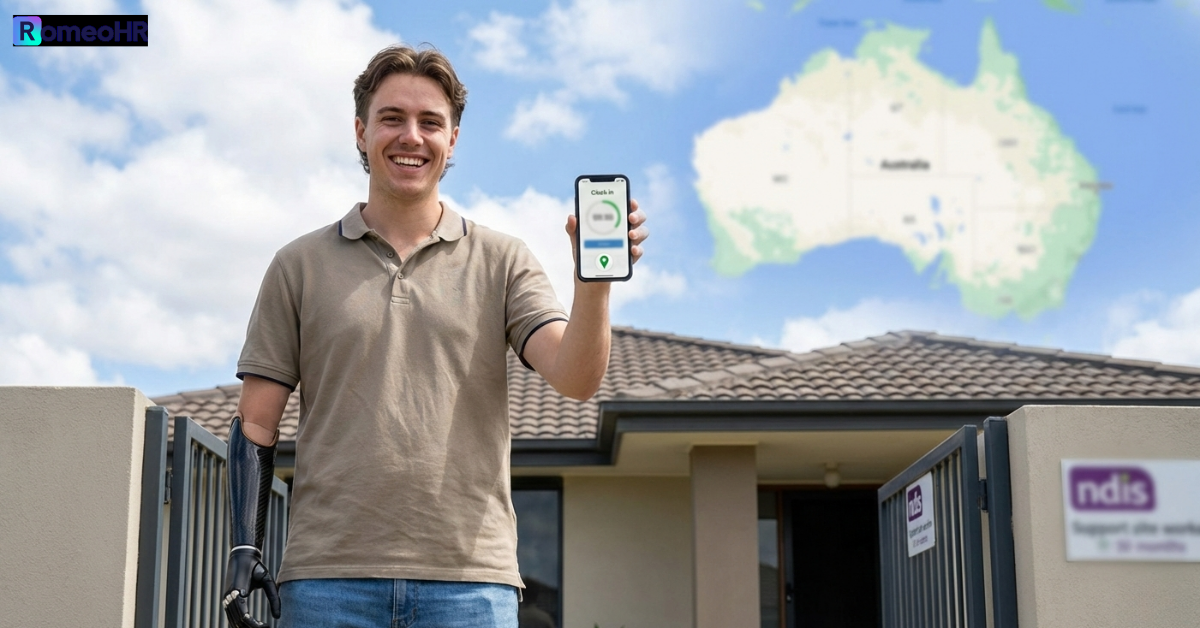
A shift is first created and assigned to a worker, linked directly to the participant profile. When the worker completes the shift, they clock in and out using the mobile app, logging breaks and travel time as required. The system finalises the timesheet, calculates exact hours, and applies the correct pricing tiers based on NDIS Pricing Arrangements.
Once approved, an invoice is automatically generated for the participant, with all services itemised and ready to send. Invoices can be emailed directly or exported in the required format for NDIA or plan manager submission, often within 24 hours of shift completion.
Example: Pricing Logic in Action
Consider a single Saturday night SIL shift. Manually, this would require an admin team to split the shift into multiple segments, apply different rates, and check pricing tables.
With automated invoicing, the system does this for you. Three hours of evening support, six hours of sleepover, and two hours of active overnight support are each mapped to the correct NDIS support item codes. If the shift falls on a public holiday, the surcharge is applied automatically. The result is a clear, line-by-line invoice that plan managers can easily verify.
Why Automated Invoicing Matters
NDIS providers depend on accurate, timely invoicing to keep revenue flowing and maintain trust with participants and plan managers. When invoicing is automated, businesses reduce the time spent building and checking invoices, minimise claim rejections due to errors, and shorten payment cycles.
More importantly, finance teams gain confidence that every invoice reflects what was delivered no more guesswork, no more reconciliation marathons.
RomeoHR: NDIS Invoicing Software That Works for You
RomeoHR is built to remove invoicing friction from NDIS operations. By linking participant shifts, support codes, attendance data, and pricing rules into one system, it allows providers to generate accurate invoices with a single click.
With pre-linked participant shifts, auto-calculated rates by shift type and day, and seamless export to NDIA, plan managers, or Xero, RomeoHR turns invoicing from a bottleneck into a background process.
Stop wasting hours reconciling spreadsheets. Start invoicing faster and with confidence.