
The Problem: “One Staff Member Left Early but Got Full Pay”
A support worker is rostered for a three-hour shift. They arrive late, leave 45 minutes early, and still submit a timesheet for the full duration. The admin team, juggling dozens of other tasks, approves it without verification - a scenario that’s unfair to the participant and risky for the provider. Payroll runs as usual. The participant is billed for services not fully delivered, or worse, the claim is later flagged during an audit. That’s why having a practical guide for verification and approvals (built into the workflow, not sitting in a binder) matters.
This situation isn’t rare. In manual systems, it’s almost inevitable.
For NDIS providers, unreliable attendance tracking creates multiple risks at once. You may end up overpaying staff for hours not worked. You may overclaim against participant plans, leading to clawbacks or rejected invoices. Participant trust can erode if service delivery doesn’t match what’s billed. And if auditors from the NDIS Quality and Safeguards Commission request evidence, missing or inconsistent records can become a serious compliance issue.
What looks like a “small admin oversight” can quickly turn into a major liability.
Recommended Reads
- Explore More Back‑Office Wins for NDIS Providers
- Practical Reads to Save Time and Reduce Risk
- More Tools to Help You Automate and Scale
- Keep Building a Compliant, Time‑Saving System
- Smart Reads for Smarter NDIS Operations
- Don’t Miss These Related Guides
- Readers Also Found These Helpful
- Level Up Your Back‑Office with These Articles
- Further Reading for NDIS Admin Simplification
- Future-Proof Your Operations with AI‑Powered Insights
Why Accurate Attendance Tracking Matters for NDIS Providers
NDIS funding is public money. That alone changes the standard.
Every minute of support delivered must be accurate, verifiable, and defensible. Claims must be backed by reliable evidence showing when services were delivered, by whom, and where. Any discrepancy, even if unintentional, can trigger investigations, financial penalties, or restrictions on service delivery.
Beyond funding, there’s also a duty of care. If a support worker leaves early or doesn’t arrive at all, participants may be left without the assistance they rely on. That’s not just an admin issue; it’s a safety and quality-of-care concern. Reliable attendance tracking helps providers identify issues immediately, not days or weeks later when it’s too late to act.
Why Manual Timesheets Fall Short
Traditional attendance methods rely heavily on trust and after-the-fact verification. Paper or spreadsheet-based timesheets are filled in hours or days later. Admin staff must assume the information is correct, because there’s no independent way to verify it. Location, identity, and exact time worked are all essentially unproven.
As organisations grow, this approach simply doesn’t scale. The more shifts you manage, the harder it becomes to catch inconsistencies. Manual verification becomes time-consuming, stressful, and unreliable precisely when accuracy matters most.
The Technology Fix: GPS, Geofencing, and Facial Recognition
Modern NDIS attendance tracking replaces guesswork with evidence. Purpose-built systems now capture attendance data in real time, automatically, and securely.
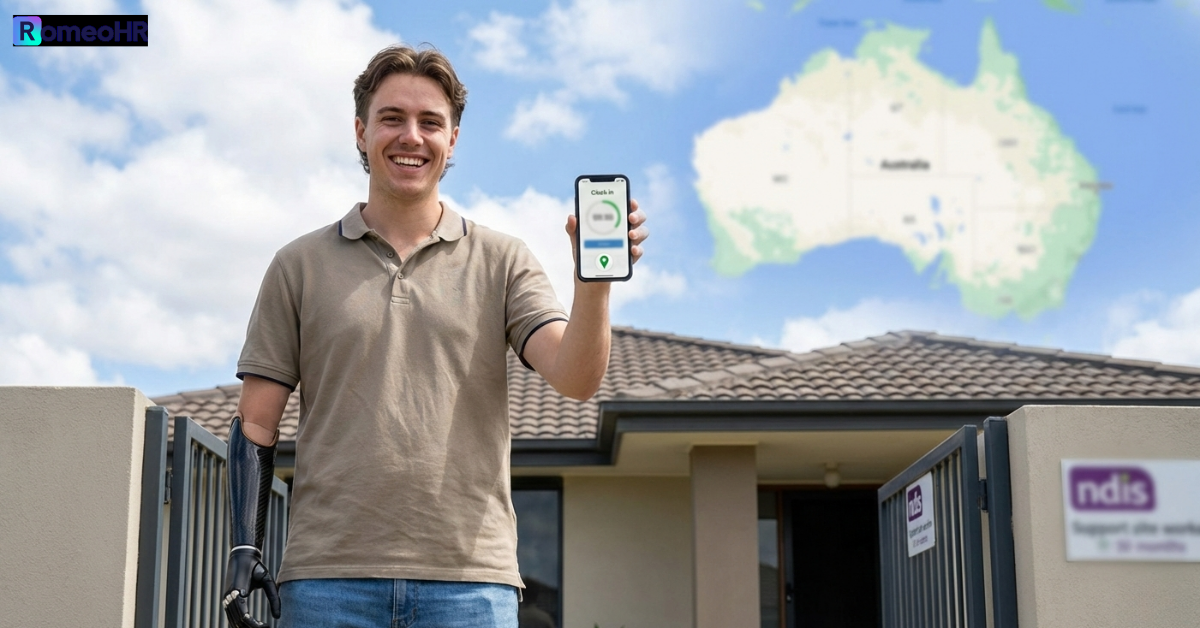
With mobile clock-in and clock-out, support workers log their attendance using an app on their phone. Each entry is timestamped and submitted instantly, removing delays and ambiguity.
GPS verification adds another layer of certainty. When a worker clocks in or out, their location is captured automatically, confirming they were physically present at the participant’s service location. This removes the risk of remote or false clock-ins.
Geofencing strengthens this further by creating a virtual boundary around approved service addresses. Workers can only clock in when they are within that defined zone, preventing attendance logs from unrelated locations such as homes, cafés, or car parks.
Facial recognition completes the verification loop. A selfie taken at clock-in confirms that the correct worker is starting the shift, eliminating buddy-punching or shared logins. Together, these technologies create a reliable, tamper-resistant attendance trail.
The result is attendance data that stands up to audits, supports accurate payroll, and protects both providers and participants.
Manual vs Automated Attendance: A Clear Difference
When attendance is tracked manually, accuracy is low, identity confirmation is trust-based, and location verification is nonexistent. Fraud risk is higher, compliance readiness is weak, and admin teams spend hours reviewing and reconciling shifts.
With automated attendance using GPS and facial recognition, clock-ins are accurate, locations are verified, identities are confirmed, and compliance records are audit-ready. Admin time drops dramatically because the system automatically flags issues, eliminating the need for constant manual checking.
Real-Time Alerts: Fix Issues Before They Escalate
One of the biggest advantages of automated attendance systems is visibility. Instead of discovering problems days later during payroll, issues are flagged immediately.
Advanced platforms like RomeoHR send real-time alerts if a worker doesn’t clock in, leaves early, or records attendance outside approved parameters. Shifts that need review are automatically highlighted, allowing admin teams to intervene quickly. This proactive approach prevents small issues from turning into financial losses or compliance breaches.
How RomeoHR Supports Accurate, Compliant Attendance
RomeoHR’s NDIS attendance tracking is designed specifically for the realities of disability support work. Support workers use a simple mobile app to clock in and out. GPS and geofencing ensure attendance occurs at the correct location, while built-in facial recognition confirms identity.
All attendance data flows directly into timesheets, payroll, and billing, creating a single source of truth across your organisation. Real-time dashboards provide managers with instant visibility, and audit-ready logs offer confidence when compliance checks arise.
The outcome is fewer disputes, stronger compliance, reduced admin workload, and greater trust with participants and plan managers.
Conclusion: Attendance Accuracy Isn’t Optional in NDIS
In NDIS businesses, attendance tracking is not a “nice to have.” It’s a core compliance and financial control. Manual systems leave too much room for error, risk, and stress. GPS-verified, face-recognition-backed attendance gives providers the confidence that every shift worked is accurate, verifiable, and defensible.